
Twin Shaft Mixer Diesel Engine VS Electric Motor
The selection of the power system for a twin shaft concrete mixer is a core decision point that is often underestimated in engineering procurement. Diesel engine drive and electric motor drive are not differences in technological generations, but rather two technological routes differentiated for different engineering scenarios. In my years of experience, I have observed that many projects, in pursuit of low initial costs or high flexibility, choose the wrong power type, leading to soaring operating costs or lower-than-expected production efficiency later on. Based on our practical experience in power matching design for twin-shaft mixers, we conduct a professional comparison of the two from three dimensions: output characteristics, cost structure and scenario adaptation.
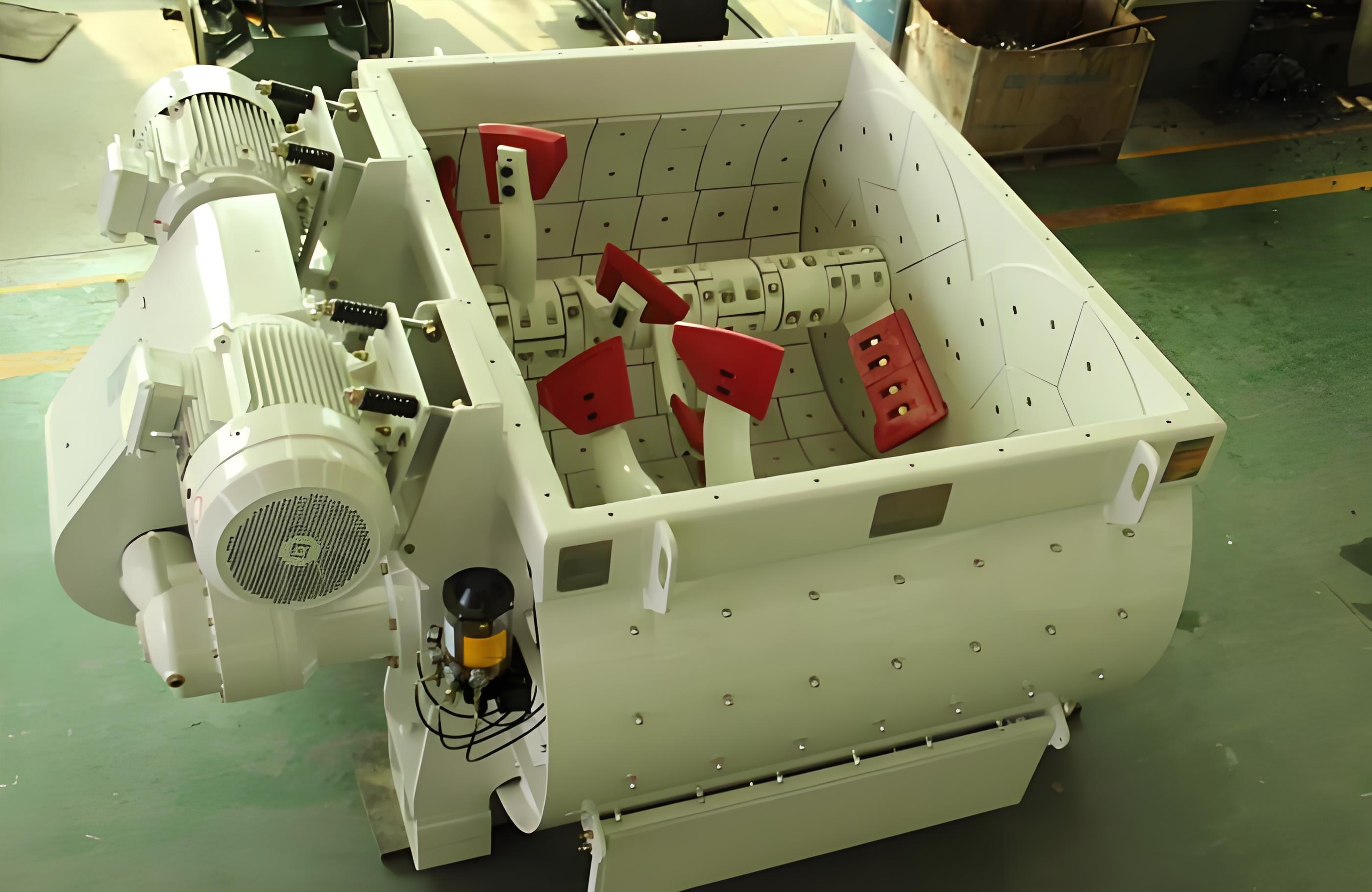
The difference in power output characteristics directly affects the stability and adaptability of mixing production.
Electric motor drive solutions generally use dual motors corresponding to dual-shaft transmission, resulting in stable and controllable speed. Under load fluctuations, the speed fluctuation rate is less than 1%, ensuring high consistency in each mixing cycle and small dispersion in the homogeneity of the finished concrete. Taking the mainstream 2m3 concrete mixer model as an example, the standard configuration includes dual 30kW three-phase asynchronous motors, coupled with planetary gearbox transmission, achieving a total system transmission efficiency of 88%~92%, demonstrating a significant advantage in energy utilization.
Diesel engine drives typically employ a single high-power diesel engine paired with a transfer case for synchronous dual-shaft drive. Speed fluctuations are significant due to load variations, reaching 5%–8% under full load. However, they offer ample low-speed torque reserves and strong overload starting capability, making them more suitable for extreme conditions such as high aggregate content and high-viscosity specialty concrete. Due to losses in the transfer case and transmission chain, the overall power transmission efficiency of the diesel engine version is approximately 75%–80%, lower than that of the electric motor drive solution.
The quantifiable difference in full-cycle operating costs is a core consideration in selection. Energy consumption cost is the biggest variable. Based on a 2m3 concrete mixer operating at full load, the electric motor version consumes approximately 52–58 kWh per hour. Using the average overseas industrial electricity price of $0.12/kWh, the hourly energy cost is approximately $6.3–7.0. The diesel engine version consumes approximately 18-22 liters of fuel per hour. Based on an average diesel price of $0.85 per liter, the hourly power cost is approximately $15.3-18.7, which is 2.4-2.7 times that of the electric motor version. Maintenance costs also differ significantly. The electric motor system only requires periodic checks of bearing seals and wiring, with an average annual maintenance cost of approximately $300-$500. The diesel engine requires periodic oil, filter, and fuel injector changes, with an average annual maintenance cost of approximately $1800-$2500, and also demands higher technical expertise from maintenance personnel. Initially, the diesel engine version is 15%-20% more expensive than the electric motor version for the same specifications, mainly due to the increased cost of the diesel engine itself and the transfer case.
Clear the application scenarios is a prerequisite for rational selection. The core application scenario for electric motor drives is a stable three-phase power grid, suitable for long-term fixed scenarios such as stationary commercial concrete plants and precast component production lines in factories, where continuous production offers significant economic advantages. The core value of diesel engine-driven systems lies in their independent operation without a power grid, making them suitable for areas without electricity, such as rural roads, water conservancy dams, and mining infrastructure, as well as mobile concrete plants that frequently relocate. Based on my personal experience, for projects with a duration exceeding 12 months and with grid access, the electric motor version is the preferred choice, as the initial purchase price difference can be recovered through operating cost savings within 6-8 months. For short-term rural projects with a duration of less than 6 months, the diesel engine version offers greater flexibility, eliminating the need for additional power conversion equipment and resulting in lower overall implementation costs.
In general, neither power source is inherently superior; the key lies in the compatibility with the specific project scenario. Haomei's JS and SICOMA series twin-shaft mixers offer both electric motor and diesel engine drive configurations, allowing for targeted selection based on project power supply conditions, duration, and operating cost calculations, achieving the optimal match between the power solution and project requirements.


